
Thirty-one years ago, Rwanda lay in ruins its social fabric torn apart by the 1994 Genocide against the Tutsi, which claimed over a million lives and left the nation grappling with profound trauma, loss, and institutional collapse. From the ashes of division and despair, however, a remarkable story of rebirth emerged—one driven by collective resolve, innovative homegrown policies, and steadfast leadership. Rwanda’s recovery has since become one of the most cited examples of post-conflict reconstruction and national renewal in Africa.
As Rwandans usher in 2026, the New Year marks more than a simple change on the calendar. It is a pivotal moment to reflect on more than three decades of extraordinary progress, celebrate hard-won unity and stability, and renew commitment to Vision 2050 the country’s ambitious blueprint for a prosperous, inclusive, and self-reliant future.
The foundation of this transformation was laid immediately after the genocide, when the Rwanda Patriotic Army (RPA), the military wing of the Rwanda Patriotic Front (RPF), halted the killings and paved the way for rebuilding a shattered nation. What followed was a deliberate and comprehensive effort to heal a fractured society: fostering national unity, promoting reconciliation, restoring security, and reconstructing institutions and infrastructure while transforming key sectors from the ground up.
These initiatives were not merely recovery measures; they were the seeds of a resilient nation. Farmers rebuilt livelihoods, communities embraced reconciliation mechanisms, and entrepreneurs began innovating in emerging sectors. From rural hillsides to growing urban centers, Rwandans in every walk of life contributed to rebuilding their country.
This resurgence would not have been possible without the trust Rwandans placed in the visionary leadership of President Paul Kagame. Championing unity, transparency, and accountability, Kagame has consistently prioritized citizens’ interests, turning potential into tangible progress. His leadership has not only stabilized the country but propelled it forward, as evidenced by sweeping transformations across governance, infrastructure, health, education, and the economy.
A cornerstone of this success is strengthened national unity. According to the 2025 Rwanda National Unity and Reconciliation Barometer, unity and reconciliation stand at an impressive 95.3%, up from 82.3% in 2010 and 94.7% in 2020. Unity alone scored 95.6%, reconciliation 95%, and social cohesion 90.8%, reflecting how healing divisions has become a lived reality rather than a policy aspiration.
Infrastructure development has been equally transformative, marking Rwanda’s leap from devastation to modernity. Roads now link once-isolated villages to markets and services, while Kigali’s skyline features modern skyscrapers and planned urban zones that rival those of global cities. Electricity coverage reached approximately 85% of households by late 2025, including both grid and off-grid solutions up from just 2% in 2000.
Thatched-roof (Nyakatsi) homes have been eliminated through targeted social programs, replaced with decent and durable housing. Health services have expanded dramatically, with hospitals, health centers, and posts bringing care closer to families. As a result, life expectancy has risen from around 48 years in the immediate post-genocide period to about 70 years in 2025.
Social protection programs have woven a safety net for the most vulnerable. The Girinka program, launched in 2006, has distributed cows to impoverished households, improving nutrition, income, and dignity at the grassroots level. This “one cow per poor family” initiative has helped spur household economic growth while strengthening citizens’ participation in national development.
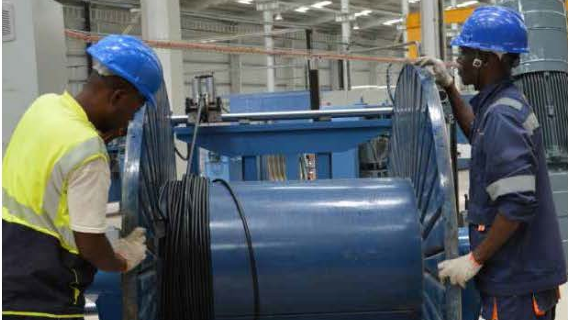
Education remains another pillar of progress. Schools have expanded nationwide, reducing dropout rates and ensuring universal access. Technical and Vocational Education and Training (TVET) institutions have equipped young people with market-ready skills, producing graduates who drive innovation, productivity, and entrepreneurship. International institutions such as Carnegie Mellon University Africa and the African Leadership University have established campuses in Rwanda, reinforcing the country’s reputation as a regional education and innovation hub.
Tourism has also emerged as an economic powerhouse, generating $647 million in revenues in 2024 and projected to exceed $700 million in 2025. Attractions such as Volcanoes National Park draw visitors from around the world, while surrounding communities benefit through the Revenue Sharing Program, increased from 5% to 10% in 2017, funding schools, roads, and local infrastructure.
Security and safety underpin all this development. In the 2025 Rwanda Governance Scorecard published by the Rwanda Governance Board (RGB), the Safety and Security pillar scored 90.02%, maintaining its top position. Rwanda is widely recognized as one of Africa’s safest countries and Kigali among the world’s cleanest cities.
These achievements have translated into strong economic performance. GDP growth reached 11.8% in the third quarter of 2025, with GDP totaling Rwf 21,512 billion in the 2024/25 fiscal year.
Building on Vision 2020 which reduced poverty from 56.7% in 2005 to 38.2% in 2017 and lifted GDP per capita from $225 in 2000 to over $1,000 by 2020 Rwanda now pursues Vision 2050. The strategy aims to achieve upper-middle-income status by 2035 and high-income status by 2050, anchored in a knowledge-based economy, sustainability, and innovation.
Accelerating Toward Vision 2050 in a New Year of Promise
“Vision 2020 was about what we had to do in order to survive and regain our dignity.
But Vision 2050 has to be about the future we choose, because we can, and because we deserve it. Rwandans will not be satisfied to live paycheck to paycheck, harvest to harvest, without accumulating wealth and financial security.” These words, spoken by President Paul Kagame in December 2015 at the 13th National Umushyikirano Council, laid the philosophical foundation for Vision 2050.
They continue to resonate today, reflecting leadership centered on dignity, opportunity, and long-term prosperity.
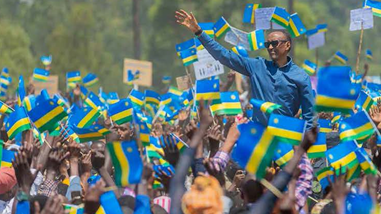
On December 29, 2025, President Kagame hosted a national celebration bringing together people from all walks of life to reflect on the year’s accomplishments and express gratitude for every Rwandan’s role in safeguarding national security. He noted that 2023 and 2024 had ended strongly and that 2025 had been equally successful. “We have achieved a lot, and this is a moment to celebrate,” he said, emphasizing that Rwanda’s progress is driven by its people.
As 2026 begins, Rwanda stands as a beacon of resilience and ambition in East Africa. From the depths of the 1994 Genocide against the Tutsi, the country has authored one of the continent’s most compelling recovery stories. Today, with sustained growth, rising human development indicators, and a clear long-term vision, Rwanda’s march toward Vision 2050 continues guided by unity, accountability, and the collective will of its people.