
Rwanda’s exports continued to grow in the 2024/25 fiscal year, with the Democratic Republic of Congo (DRC) holding a critical position as the country’s second-largest export market, according to the Rwanda Revenue Authority.
The authority reported that Rwanda shipped Rwf 375.4 billion ($365 million) worth of goods to the DRC, trailing only the United Arab Emirates, which received Rwf 2.2058 trillion of Rwandan exports.
Overall, Rwanda earned Rwf 3.9555 trillion from exports during the fiscal year. Other major export destinations included the Netherlands (Rwf 218.8 billion), Belgium (Rwf 195 billion), Sweden (Rwf 194.9 billion), China (Rwf 144.3 billion), Luxembourg (Rwf 72.5 billion), Kenya (Rwf 59.1 billion), the United States (Rwf 53.4 billion), and Switzerland (Rwf 49.7 billion).
Most of Rwanda’s export earnings came from fully processed goods, which generated 1.9078 trillion francs.
Capital goods and raw materials contributed Rwf 862 billion, semi processed goods Rwf 33 billion, and sensitive goods requiring special handling accounted for Rwf 1.1527 trillion. “The growth in exports shows that Rwanda’s investment in processing and value addition is paying off,” a Kigali-based trade expert said.
“There is a clear demand for locally made goods, especially in neighbouring countries like the DRC.” Rwandan exports to the DRC mainly include processed foods, consumer goods, and construction materials, analysts said.
The proximity of border cities such as Goma and Bukavu allows for more reliable and cost-effective trade compared with distant markets.
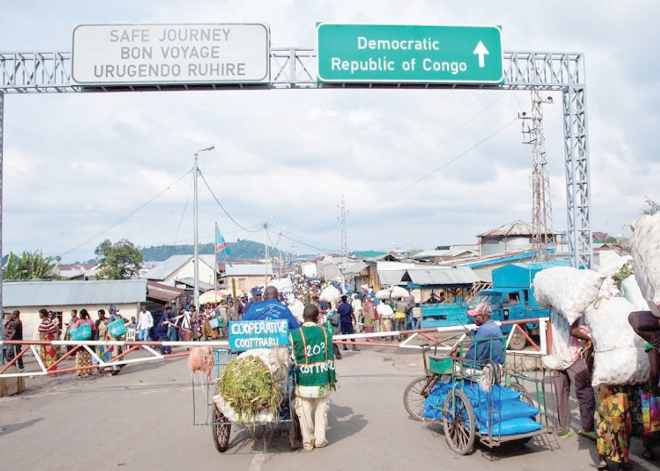
A Kigali-based exporter said the surge in exports to the DRC is noticeable Rwandan-made products, from food items to building materials.” on the ground. “We are shipping more locally produced goods across the border than ever before,” the exporter said.
Consumers in eastern DRC are increasingly buying Agricultural and mineral exports also contributed significantly to Rwanda’s foreign exchange earnings.
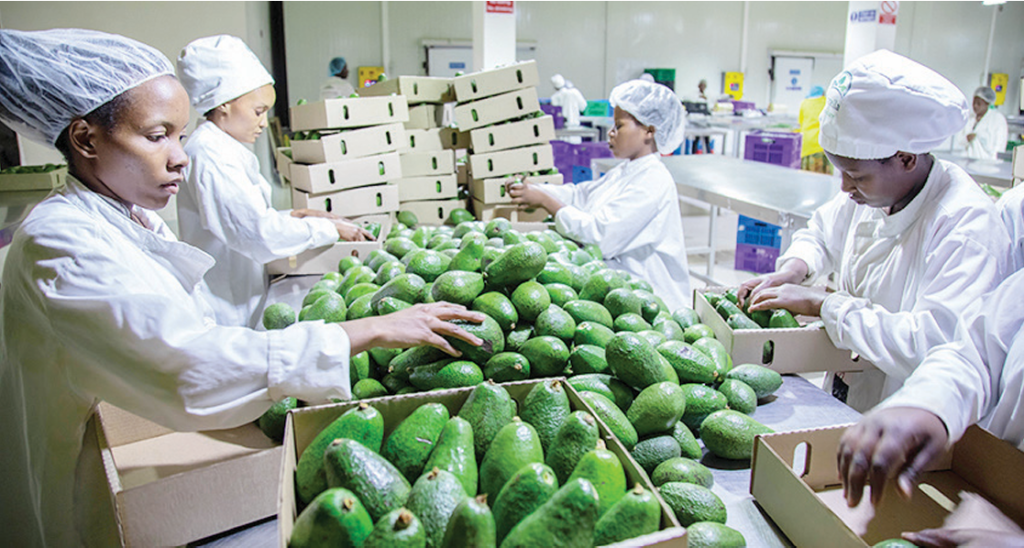
Minerals such as tin, coltan, wolfram, and gold brought in $1.6 billion, while agricultural commodities such as coffee, tea, avocado, and chilli peppers saw strong demand in Europe, Asia, and Arab countries.
Avocado exports reached 4,200 tonnes, compared with 1,000 tonnes in 2019, and fresh chilli peppers found new markets in Belgium, Italy, the Netherlands, and Germany.
Processed agricultural products, including cooking oil and flours derived from maize, wheat, and other cereals, further boosted export value.
By 2024, Rwanda counted 85 large agro-processing factories, 608 small and medium enterprises in the same sector, 91 large manufacturers producing consumer goods, and 38 large construction material factories alongside hundreds of smaller firms.
Rwanda has set a target to increase exports by 13% annually through 2029 as part of its five-year development acceleration plan.
The Ministry of Trade and Industry reported 16% growth in exports in 2024/25, attributing the gains to expanded market access, increased production, and diversification of products.
While the UAE remains Rwanda’s top export destination, the rise of the DRC as a strategic regional market underscores the importance of regional trade.
Experts said balancing regional and global trade is key to sustaining Rwanda’s economic growth. Rwanda’s focus on value added exports and regional trade positions the country for continued growth in the coming years.