
Agencies Dozens of Kenyans hired by the British army to help conduct training exercises have filed lawsuits complaining of unsafe work conditions.
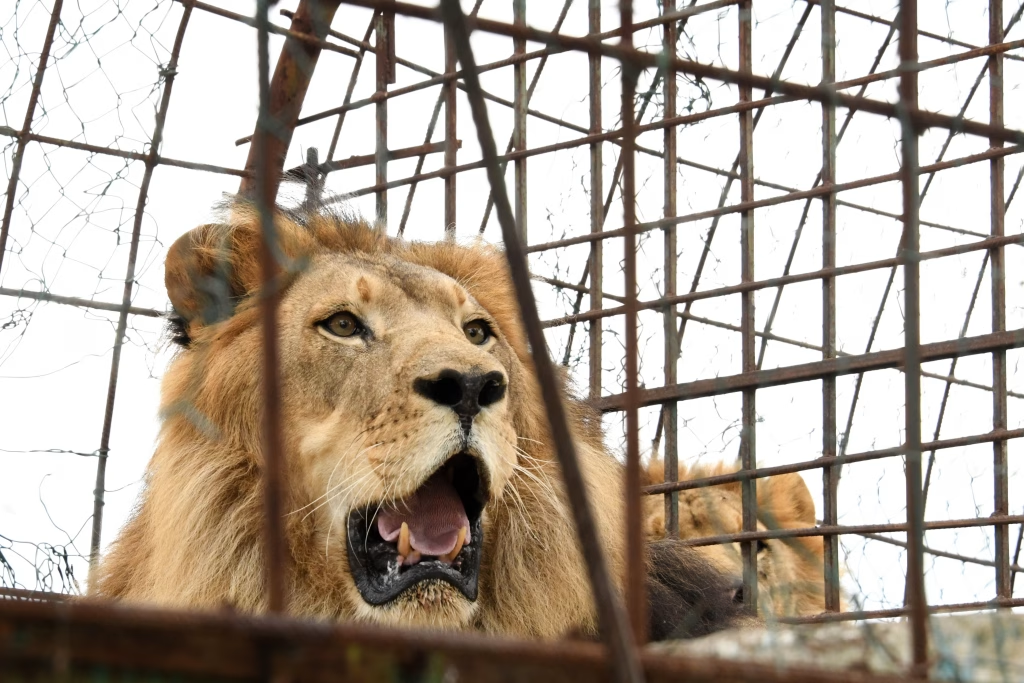
They include a 70-year old man who was mauled by a lion and not taken to hospital until the next day, leaving him with serious injuries.
Sanguiyan Ole Legei alleges in a witness statement that he was left to sleep in open ground where “a lion grabbed my left knee and dragged me for approximately 100 meters.”
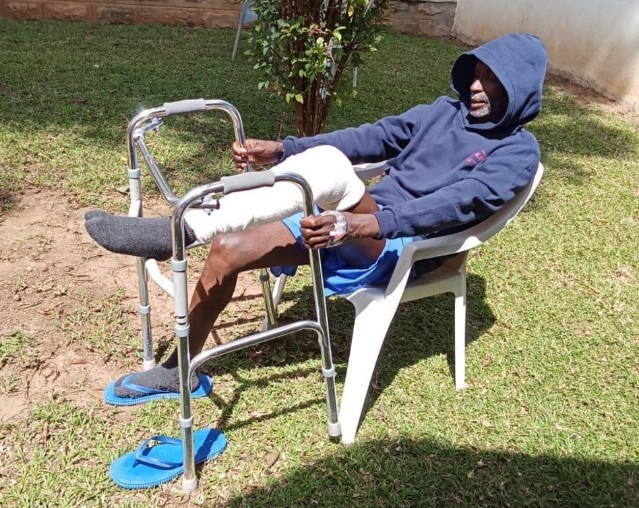
He was rescued by the soldiers to take him to hospital, where he required surgery and spent 19 days. He has been left unable to walk without crutches and lives “with constant pain from the lion bite”.
Others are seeking colleagues who “heard my screams and the lion’s roar…I was bleeding heavily, in excruciating pain, and unable to stand or move.” British soldiers, whose camp was protected by barbed wire, later provided f irst aid but did not evacuate him immediately claiming it would “spoil the games”.
“Instead of being rushed to hospital, I was placed in isolation in a tent, left bleeding and unattended the whole night, without medical care despite the availability of British vehicles, ambulances and an airplane in sight,” Legei alleges.
It took over 15 hours for compensation for breathing and hearing problems after being exposed to M18 smoke grenades and explosions without adequate protective equipment.
The wargame in east Africa took place in wildlife conservancies where tourists can also go on luxury safaris.
Thousands of British soldiers train in Kenya each year and rely on local labourers to help conduct exercises, with some posing as enemy forces. Sanguiyan Ole Legei says he was dragged around 100 meters by a lion (Supplied).
‘Racial discrimination’
The claims against the British army, which are being filed at an employment court in Kenya, concern a four-day training exercise that took place last year.
Local men were hired to help an army infantry unit, 2 Rifles, train at Lolldaiga and Ole Naishu conservancies, for Exercise Haraka Storm Bravo.
Their petition, filed by lawyer Evelyn Kilesi, claims the workers were “subjected to degrading treatment, denied safe working conditions, and exposed to environmental hazards.” They were paid less than £6 per day.
She details how British “soldiers (who are primarily white) participating in the same exercises were consistently provided with full protective equipment… highlighting a racially discriminatory disparity in treatment and safety measures.”
“No formal employment contracts, safety briefings, or written terms of engagement were provided to the Petitioners”, which she says was “in stark contrast” to the British soldiers Kilesi claims this shows a “failure to value the lives of black casual labourers, prioritizing military exercises over the welfare of local workers.”
Recurring problem It is not the first time that Kenyans working at Lolldaiga and Ole Naishu during army exercises have complained about safety.
In 2021, Linus Murangiri was killed by a passing truck at Lolldaiga when the ranch became engulfed in smoke from a bush fire sparked by British soldiers.
The blaze polluted the wider region, impacting thousands of local people who successfully claimed compensation.
In 2007, Robert Swara Seurei was killed by an explosive he picked up while clearing ranges at Ole Naishu. He thought the item was a candle and died when he lit it at home.
The Ministry of Defence has been dogged by complaints from its own troops about hearing damage, particularly from its new fleet of Ajax armoured vehicles.
Accounts show the department paid out £2.1 million last year for “noise induced hearing loss”. An MOD spokesperson said: “We don’t comment on individual claims. We take the health and safety of Locally Employed Civilians (LECs) very seriously and provide them with appropriate safety briefings.”